

The Fourth Annual Aware National Mental Health Survey reveals insights from the Irish public on how we understand and support our mental health today;
Day-to-day lives of adults across Ireland
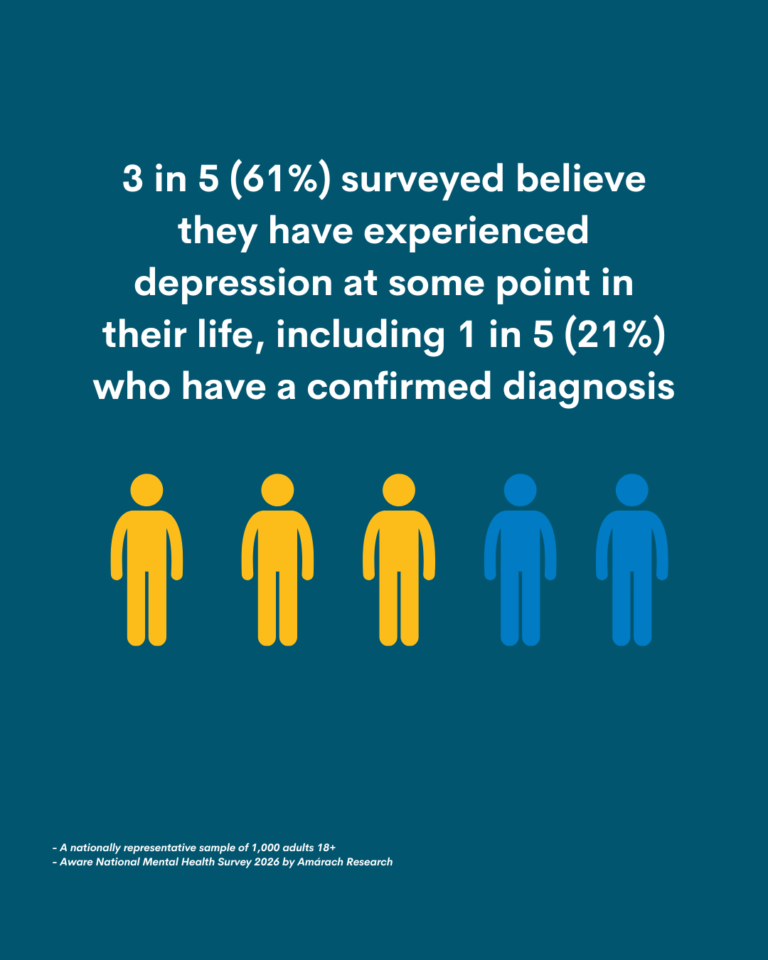
- 61% of people surveyed believe they have experienced depression at some point in their life, with 1 in 5 having a diagnosis. The survey indicates that the prevalence of those who have experienced mental health issues has increased since 2024.
- Whereas over half of all over 55-year-olds report they have not experienced depression compared with only 28% of 18-24 year olds.
- A third of people living with a chronic illness (31%) report a current experience of depression.
- The total number of survey respondents who indicated they have never felt depressed, down or hopeless, has decreased by 10 percentage points compared with the 2024 National Survey (from 58% to 48%).
- Of those surveyed who experience depression or anxiety, less than one in five (18%) indicated that they have participated in a mental health education programme to support their mental health, with one in six (16%) of them indicating that they attended regular psychotherapy.
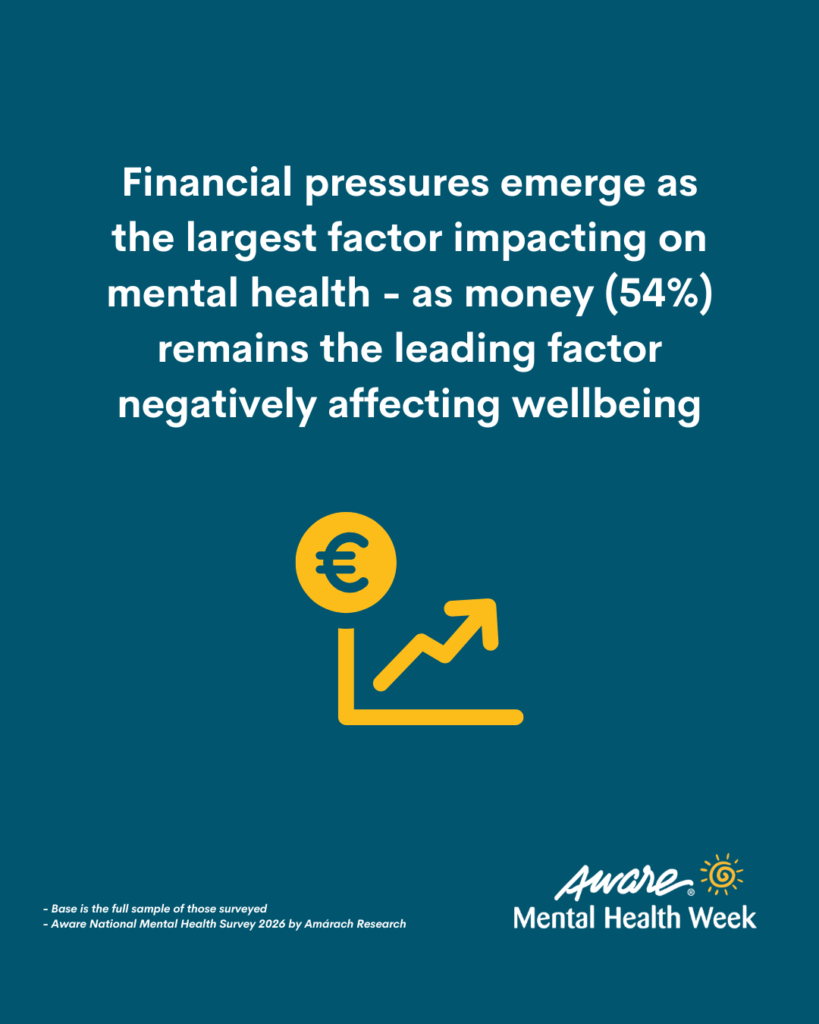
- In this year’s survey financial pressures emerge as the largest factor impacting on mental health – as money (54%) remains the leading factor negatively affecting wellbeing.
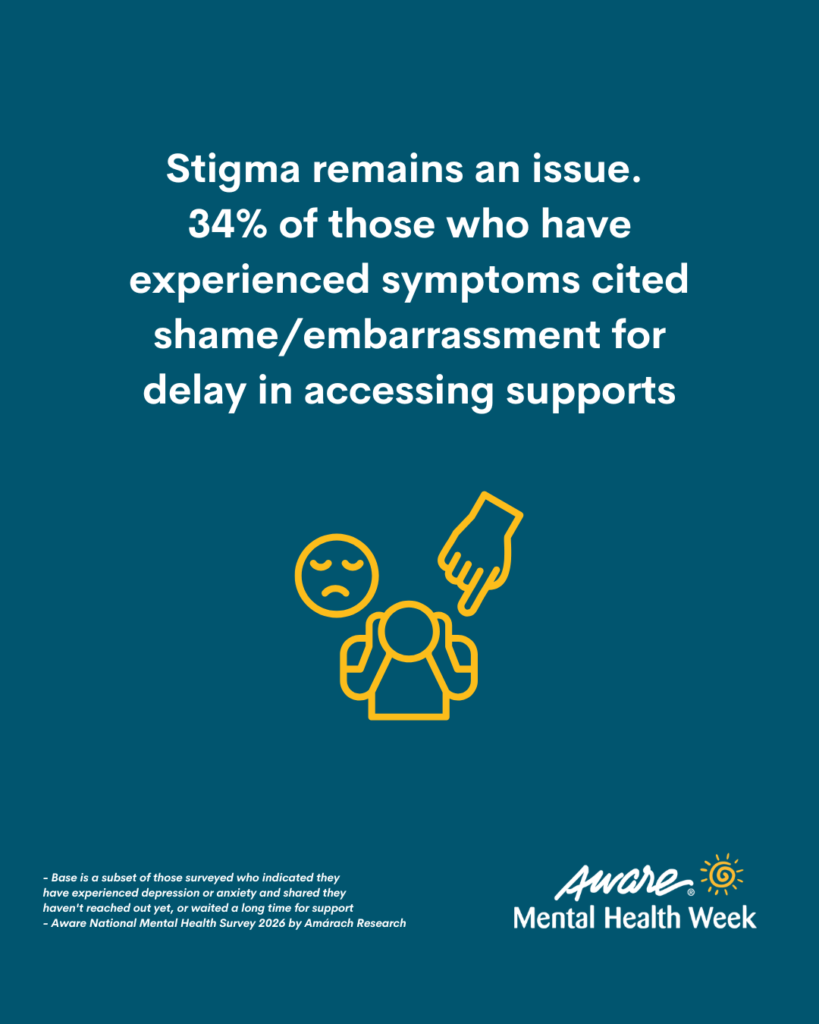
- Stigma remains an issue as 34% of those who have experienced symptoms cited shame/embarrassment for delay in accessing supports.
Aware, the national mental health organisation today announced the findings from its second annual national survey looking at the public’s experience and perception of depression and anxiety. With results broadly in line with the 2024 findings, the survey emphasises the ongoing prevalence of depression and anxiety and their impact on individuals and communities throughout Ireland. The online survey was conducted by Amárach Research with a nationally representative sample of 1000 adults across August and September 2026.
Narrow understanding of range of symptoms
Despite 2 in 3 respondents (66%) being confident that they would recognise, when asked to list the main symptoms of depression, the majority only referenced symptoms directly linked to mood such as feeling sad, anxious or guilty, loss of interest and low energy. Awareness of physical symptoms and those linked to overall wellbeing was limited, with only 1% of respondents mentioned physical aches and pains as a possible symptom, and only 10% referenced changes in sleeping patterns. These results were similar to the 2024 survey, showing there remains a need for increased understanding of the possible symptoms of depression.
Irish adults reporting high rates of depression and anxiety
61% of people surveyed believe they have experienced depression (versus 53% in 2024, and 58% in 2023), with 1 in 5 of those sharing they have a confirmed diagnosis (21% this year, versus 21% in 2024 and 24% in 2023 survey).
The impact of low mood on day-to-day life was varied, within all respondents who reported experience of depression, with 71% agreeing with the statement ‘my depression or low mood makes going to work and attending to responsibilities difficult’(versus 66% in 2024)
Anxiety rates also continue to be high, with 19% reporting a diagnosis of anxiety disorder, increasing to 1 in 4 (25 per cent) for those aged 35-44. A further 11% believe they have an undiagnosed anxiety disorder and 21% say they experience anxiety frequently. The condition is most prevalent amongst those aged 18-34 (66% of those surveyed) and appears to reduce with age, impacting on only 33% of aged 55 and over. 2 in 5 (40%) of those who expressed they have experienced anxiety note it can impact their ability to function most days, with more male respondents expressing (50% versus 32% of females).
Females and those aged 35-54 are most likely to have received a diagnosis of depression or anxiety. With a notable difference between age groups of those self-reporting they have experienced depression at some point with 73% of the 25-34 age bracket versus 47% of those aged 55+.
1 in 5 who noted they experience depression or anxiety shared they haven’t reached out for support yet, including a high rate of 18-24s (27%), with 34% (of all who all who haven’t reached out or waited a long time for support) citing shame/embarrassment when asked what made it difficult to reach out for support.
Of those surveyed who experience depression or anxiety, only 18% note they joined a mental health education group programme to support their mental health and just 16% indicated they attended regular psychotherapy, while research suggests these can be effective supports*; instead the top three actions listed when asked how respondents address or support their mental health were;
- 71% indicated they confide in someone e.g. family, friend or colleague
- 70% note they visited their GP
- And 63% said they made lifestyle changes.
Factors impacting on mental health
Financial pressures emerge as the most widespread source of stress – as money (54%) remains the leading factor negatively affecting wellbeing of those survey across Ireland, with Family Responsibilities (33%) and Relationships (32%) remain the key secondary factors negatively impacting on participants mood or causing them stress/anxiety (same top 3 results as 2024 and 2023 surveys).
Social Disconnection or Loneliness Apparent
A higher rate of social disconnection was captured in this survey with 88% of all those surveyed indicated they lacked companionship at least some of the time (versus 55% in 2024), with 39% reporting they often feel isolated from others (versus 15% in 2024).
Using the UCLA Loneliness Scale (a clinical tool to assess perception of social connectedness) a higher rate of social isolation (57%) can be observed in over half (57%) of those with a ‘moderate’ current level of depression, at point of survey (current level of depression was within bracket 7-9 using PHQ-2 screening tool).
How people are taking action to address their mental health
When asked how they support their mental health only 1 in 10 (11%) noted ‘attending regular counselling/ psychotherapy’, and this number is only 4% for those aged 55+
Of those surveyed who indicated they have experience of depression or anxiety, less males (28%) than females (21%) survey said they would confide in family, friends of colleagues to support their mental health.
Similar to our annual survey in 2024, getting ‘a good night’s sleep’ is still the main way in which survey respondents report supporting their mental health (59%), closely followed by spending ‘time on enjoyed activities’ (54%), with ‘exercise/movement’ also considered important (54%), with ‘staying connected to others’ (50% per cent) and aiming for ‘a balanced and nutritious diet’ (43%) also considered important measures they can take. 1 in 4 (24%) practise mindfulness, meditation or other relaxation exercises.
Commenting on the results, Dr Susan Brannick, Clinical Director at Aware said: “Our results show that depression and anxiety remain a challenge for many people with a sizable proportion currently experiencing symptoms of depression (2 in 10) which they report having a significant impact on daily life. Of those surveyed, 21% report a diagnosis of depression, and 4 in 10 of those who reported experiencing anxiety told us they struggle to function on a daily basis because their anxiety is so bad. These results offer a snapshot of how people in Ireland are living with mental health difficulties and highlight the need for responsive and timely mental health supports and services for all.”
–
*A nationally representative sample of 1000 adults 18+ in ROI = margin of error of +/- 3.1%
–
Read Press Release from Aware on publication of 2026 Survey here.
–
Find more resources, lived experience stories, and information on the Aware Mental Health Week Campaign here.